


Sepsis is a condition where a patient’s body attacks its own cells or tissues in an effort to combat a serious infection. Typically, sepsis starts in the skin, gastrointestinal tract, urinary tract, or lungs.
Endoscopic retrograde cholangiopancreatography (ERCP) is the term that refers to a procedure that uses an endoscope and X-rays to diagnose or treat conditions involving the pancreas, liver, gallbladder, and bile ducts.
The patient was admitted to the hospital in a state of shock due to severe sepsis, with a low platelet count and a high TLC count ( white blood cells count). He was connected to a ventilator and was put on dialysis ( due to no urine output). At this point, recovery seemed unlikely. With only a brief medical history, the cause of sepsis was unknown. Endoscopic retrograde cholangiopancreatography (ERCP) revealed an infection in the gallbladder. The team at Yashoda, including the general practitioner Dr. Kamlesh A, the gastroenterologist Dr. Rakesh, and the critical care intensivist Dr. Saroj Kumar Prusty, chose to use CPD Stenting because it was impossible to operate on the patient while they were in a state of shock. In this procedure, a catheter is placed into the femoral artery, followed by a guide wire that directs a stent to the obstruction’s location and releases it. Despite all the risks, the patient got better following the stenting.
The patient was monitored closely. There was a brief period of deterioration, which improved after the antibiotics were changed. As the patient began to get better, the ventilator was removed and the dialysis was discontinued. The patient is now stable and prepared for a lap cholecystectomy, which treats issues with the gallbladder and the sepsis-causing infection.
The patient was observed in the hospital for an additional three to five days after the lap cholecystectomy, and he can return to his regular activities in eight weeks. He is counselled to refrain from engaging in any physical activity and to get as much rest as possible.
Mr Naresh Reddy Cheruku from Siddipet underwent an ERCP and Stenting Procedure for Sepsis, under the supervision of Dr Kamlesh A, Consultant Physician, Yashoda Hospitals, Hyderabad.
BMT for Multiple Myeloma
Our life has taken a 180-degree turn after being treated her. I have completely..
ALPPS Procedure
I had a successful operation with Dr. C. H. Madhusudhan. I had never imagined..
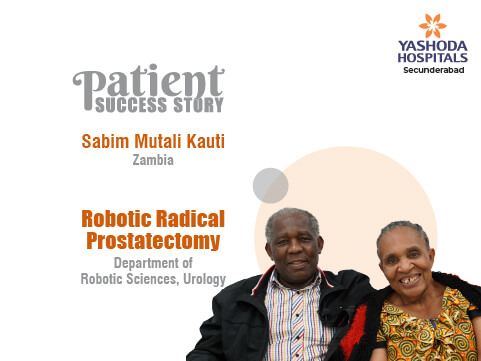
Grade 3 Prostate Cancer
Robotic radical prostatectomy is a minimally invasive surgical procedure used..
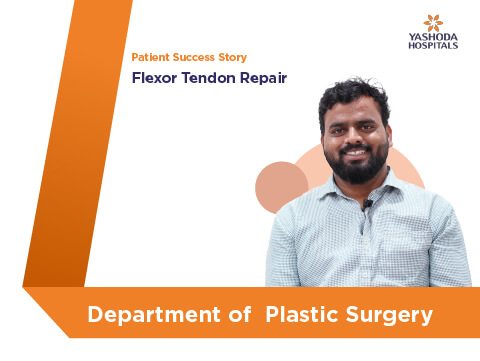
Flexor Tendon Injury
Mr. Arpula Divakar from Narayanpet successfully underwent Flexor Tendon Repair..
ACL Injury (Right Knee)
Mrs. Soma Kar Baidya from Tripura successfully underwent Arthroscopic ACL..
Knee replacement surgery
Knee replacement surgery of both knees done at Yashoda Hospitals by best..
Cochlear Implantation
“My daughter had an issue with hearing. We consulted doctors in Siliguri and..
Epidural Abscess with Discitis
“My father was diagnosed with Epidural Abscess with Discitis, and due to..
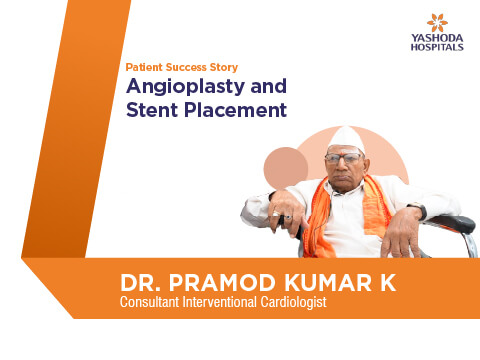
Angioplasty and Stent Placement
Angioplasty is a procedure that opens narrowed or blocked blood vessels that..
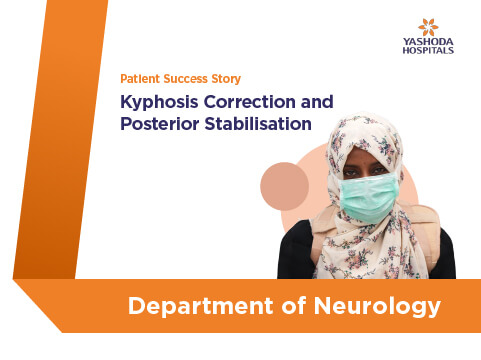
Kyphosis Correction and Posterior Stabilisation
Kyphosis surgery is a posterior spinal fusion with instrumentation in which the..

 Appointment
 Second Opinion
 Live Chat
 Call
Call More
More