What are the stages of Prostate cancer and PSA levels?
After identifying prostate cancer, doctors try to figure out its size and extent of spread. This process is called the staging of prostate cancer. It also helps the oncologist to decide the treatment plan.
Cancer staging is done in two ways: TNM (Tumour, Node, Metastasis) staging and Number staging from 1 to 4.
What is PSA? What is its importance in staging prostate cancer?
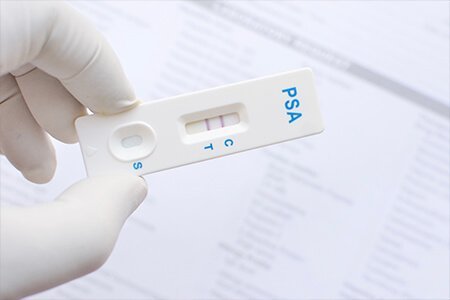
Prostate-specific antigen (PSA) is a protein secreted by the prostate gland. Some conditions such as prostatitis, benign prostatic hyperplasia (enlarged prostate) and prostate cancer result in elevated PSA levels in the body. Thus, the PSA level is one among the other tools that are used for staging prostate cancer. PSA level in the range of 4 to 10 ng/mL is suspicious and doctors may suggest screening for prostate cancer.
Stages of prostate cancer:
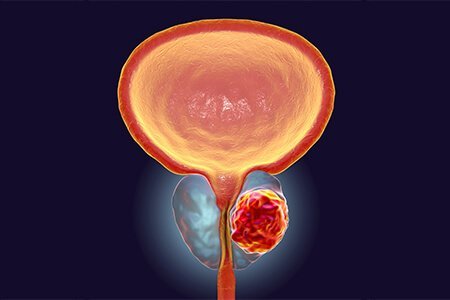
Stage 1: The cancer is localized and has not spread to lymph nodes. The PSA level is less than 10 and graded as group 1.
Stage 2: The cancer is localized and has not spread outside the prostate or lymph nodes. The PSA level is less than 20. The prostate cancer stage 2A, stage 2B, and stage 2C are graded as group 1, group 2 and group 3 or 4, respectively.
Stage 3: In stage 3A, the cancer is confined within the prostate and the PSA value is at least 20. As cancer progresses to stage 3B, it grows into the seminal vesicles and surrounding tissues such as the urethral sphincter, rectum, bladder and/or wall of the pelvis. However, in stage 3, cancer has not yet spread to the lymph nodes. The grade group of prostate cancer at stage 3A and stage 3B are group 1 to 4; at stage 3C it is group 5.
Stage 4: In stage 4A, cancer has spread to the lymph nodes but cancer has not spread elsewhere in the body. As cancer progresses to stage 4B, it spreads to other, distant parts of the body. The grade group and PSA value vary broadly.








 Appointment
 Second Opinion
 WhatsApp
 Call
Call More
More